Korean Noodle Types: The Complete Reference Guide
Korea has a noodle for every occasion — slippery sweet potato glass noodles for japchae, chewy wheat noodles for kalguksu, and icy buckwheat noodles for naengmyeon. Here is your complete guide to telling them apart.
A Country of Noodle Lovers
Korea's noodle culture is deep and varied, though it often gets overshadowed by the country's famous rice dishes and barbecue. The reality is that noodles appear at every meal — in soups, stir-fries, cold dishes, and of course the ubiquitous instant ramyun. Understanding the different types opens up a whole category of Korean cooking that is quick, satisfying, and often surprisingly simple.
The key to Korean noodles is the starch source. Each canonical type is defined by what it is made from — sweet potato starch, wheat, buckwheat, or a blend — and that determines its texture, how it behaves with heat, and which dishes it belongs in. A glass noodle and a knife-cut wheat noodle require entirely different cooking approaches and suit entirely different flavours. This guide covers all six canonical types, the instant-noodle category, a noodle-to-dish reference table, and the cooking fundamentals that apply across all of them.
The Six Canonical Noodle Types
Dangmyeon — Sweet Potato Glass Noodles
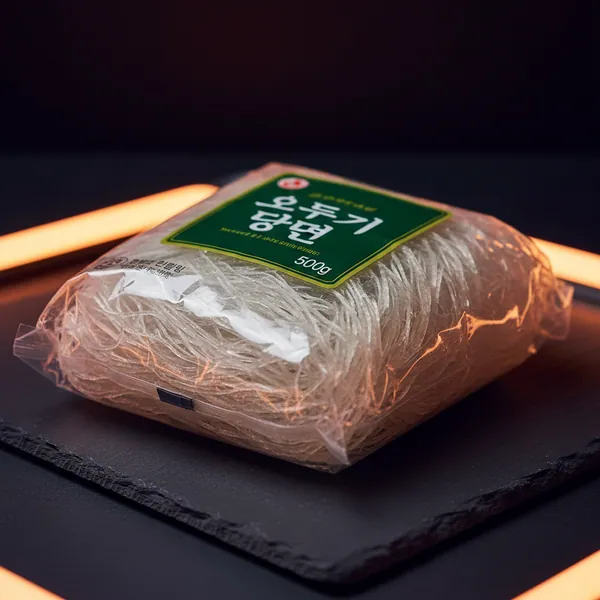
Dangmyeon (당면, "sweet potato noodles") are made from sweet potato starch. Dried, they look like grey-white, slightly brittle strands. Cooked, they turn translucent — almost see-through, deeply glossy — and develop a springy, chewy texture that is entirely unlike rice vermicelli or Chinese bean thread noodles, which can be confused with them in shops. The chew in dangmyeon is firm but yielding, never mushy, even when left sitting in a warm dish.
The signature dish is japchae (잡채) — Korea's celebratory stir-fried noodle, served at weddings, birthdays, and Korean New Year. The noodles are boiled for six to eight minutes, drained, then tossed with soy sauce, sesame oil, and sugar over low heat until they absorb and darken. Each vegetable component is cooked separately in a hot pan (spinach, carrot, onion, bell pepper, shiitake) before everything is combined. Done properly, japchae is a dish of considerable finesse.
Dangmyeon also appears as a garnish in sundubu-jjigae (soft tofu stew), in some hotpots, and inside mandu (Korean dumplings). Dried dangmyeon keeps for 18 months in the cupboard. Do not confuse it with Chinese glass noodles or vermicelli — the texture and cooking time differ.
UK sourcing: Tier 1 (Amazon, Ottogi brand). Tier 2 (all oriental supermarkets). Dried keeps well; buy in bulk.
Guksu and Kalguksu — Wheat Noodles
*Guksu* (국수) is the generic Korean term for noodles made from wheat flour. *Kalguksu* (칼국수, "knife noodles") is the most distinctive subtype: thick, flat, hand-cut noodles made by rolling wheat dough and slicing it by hand or machine. The cut edges are slightly rough, which helps the noodle cling to broth and gives a chewier bite than smooth extruded noodles.
Kalguksu is always served in soup. The two canonical broths are chicken and anchovy. Chicken kalguksu (*dak-kalguksu*) produces a pale golden soup with shredded chicken; anchovy-broth kalguksu uses a base made from dried anchovies and kelp (*dasima*), giving a clean, oceanic depth. Both are satisfying winter dishes. The noodles absorb the broth over time — kalguksu does not hold well once served, so it is eaten immediately.
*Janchi-guksu* ("banquet noodles") is a simpler, thinner version using somyeon noodles in anchovy broth, served at celebrations — the name means feast noodles, referencing the long shape that symbolises a long life.
Fresh kalguksu is available at New Malden Korean supermarkets; dried versions at Wing Yip and oriental supermarkets. Udon noodles substitute tolerably in kalguksu soup, though the texture is softer.
UK sourcing: Tier 2 (New Malden fresh; Wing Yip dried). Tier 1 (Amazon, Sempio dried kalguksu). The Sempio dried version gives solid results with an anchovy broth.
Jajangmyeon Noodles — Thick Alkaline Wheat
The noodles for jajangmyeon (짜장면) are a specific wheat noodle type: thicker and slightly alkaline, made to hold a heavy black bean sauce without going limp. They have a chewier, slightly elastic character — closer to a thick hand-pulled noodle than to standard spaghetti wheat. The alkalinity (traditionally achieved with a small amount of lye water, now usually potassium carbonate or similar) gives them a slight chew and a faint yellow tint.
The dish itself — Korea's national comfort food — is jajangmyeon: thick wheat noodles topped with *jang* sauce made from chunjang (fermented black bean paste), diced pork, onion, courgette, and potato. It is considered Korean-Chinese cuisine (*hanjung yori*), originated by Chinese immigrants in Incheon in the early 20th century and then adapted into something distinctively Korean — sweeter and more caramelised than the Shandong original. The same noodles are used for jjamppong (spicy seafood noodle soup).
Critical point: chunjang must be fried in oil before use. Raw chunjang is aggressively bitter. Frying it in two to three tablespoons of neutral oil for two to three minutes mellows it into the sweet, glossy sauce base the dish requires. Skip this step and the dish fails.
UK sourcing: Tier 3 (New Malden Korean markets, fresh). Tier 2 (Wing Yip, dried Ottogi). Dried work well for home cooking; fresh are worth the trip if you are in south-west London.
Naengmyeon Noodles — Buckwheat Cold Noodles
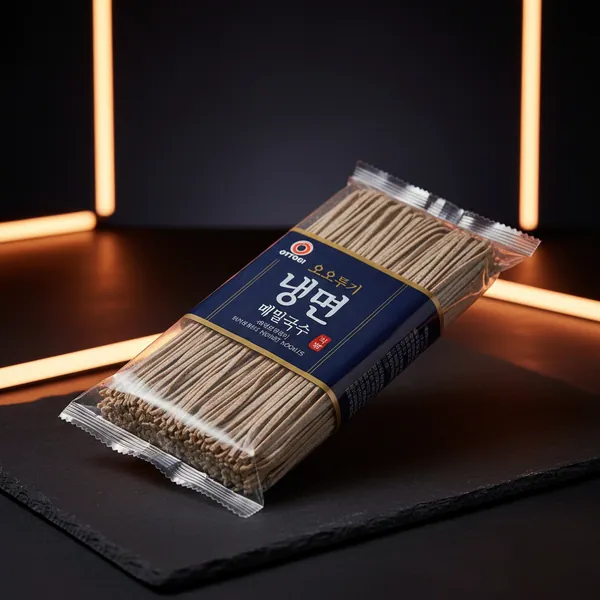
Naengmyeon (냉면) noodles are made from a buckwheat-heavy blend, often combined with sweet potato starch and sometimes kudzu for workability. They are thin, greyish-brown in colour, and extremely chewy — firm to the point where Korean custom is to use scissors to cut them in the bowl before eating. The texture is intentional and highly prized.
The dish originated in North Korea. Pyongyang naengmyeon (*mul-naengmyeon*, 물냉면) uses buckwheat noodles in a clear, ice-cold beef broth made from brisket and short rib, seasoned with salt, light soy, and a little sugar. Vinegar and mustard (*gyeoja*) come on the side as table condiments — the cook should not over-season. Garnishes are sliced boiled beef, julienned cucumber, quartered Asian pear, and a halved boiled egg.
Hamhung naengmyeon (*bibim-naengmyeon*, 비빔냉면) uses noodles made primarily from sweet potato starch rather than buckwheat — even chewier, almost rubbery — and the sauce is a spicy gochujang dressing rather than a broth. The same garnishes apply minus the broth.
After the Korean War, both styles migrated south and are now eaten nationwide. The dish is culturally coded as summer food, though it is served year-round in BBQ restaurants as a course after the meat — the cold, acidic broth is considered a palate cleanser.
Cooking method: boil for two to three minutes, then rinse immediately under cold running water until the surface starch is gone, then finish in ice water. The noodles should be ice-cold before serving — warm naengmyeon is a contradiction in terms.
UK sourcing: Tier 1 (Amazon, Ottogi or Pulmuone dried). Tier 2 (New Malden, fresh refrigerated — use within 7 days). Asian pear: Sainsbury's seasonally, or substitute nashi pear.
Somyeon — Thin Wheat Noodles
Somyeon (소면) are very thin, round wheat noodles similar to Japanese somen — the two are botanically identical and interchangeable. They cook in two to three minutes and have a delicate texture: smooth, slightly silky, less chewy than kalguksu or naengmyeon. Their main virtue is speed and versatility.
Bibim-guksu (비빔국수, "mixed noodles") is the most common warm-weather somyeon application: noodles served cold and tossed in a spicy gochujang sauce with vinegar and sesame oil, garnished with cucumber and a boiled egg. It comes together in ten minutes and tastes properly Korean. Janchi-guksu (banquet noodles in anchovy broth) uses somyeon in a hot version. In stews and broths, somyeon is sometimes used as a filler alongside other ingredients.
Japanese somen is sold everywhere in the UK (Japan Centre, major supermarkets, Amazon) and is a perfectly good substitute because it is literally the same product.
UK sourcing: Tier 1 (Amazon, Japan Centre). Tier 2 (all oriental supermarkets). The Japanese somen available at Sainsbury's and Waitrose is identical.
Jjolmyeon — Chewy Extruded Wheat Noodles
Jjolmyeon (쫄면, from *jjol* meaning springy or bouncy) are made from wheat flour and cornstarch, extruded rather than cut. The extrusion process creates a very dense, extremely chewy noodle with a round cross-section and a satisfying resistance to the bite. The name is almost onomatopoeic — it describes the sensation of chewing the noodle.
The dish is *jjolmyeon* itself: chewy cold noodles in a spicy gochujang and vinegar sauce, similar in principle to bibim-naengmyeon but with a completely different noodle texture. It is sometimes eaten in combination with tteokbokki (spicy rice cakes), making a hybrid dish that is popular as a street food and in small Korean restaurants. The chewy-against-chewy combination of jjolmyeon and tteok sounds redundant but works well because the sauce binds them differently.
This is the niche noodle on this list — less well-known than the others, less available in the UK, and most associated with informal Korean eating contexts. Worth seeking out if you enjoy extremes of chew.
UK sourcing: Tier 3 (Sous Chef online; Amazon intermittent). If unavailable, thick udon does not substitute — the extrusion-chew cannot be replicated with a cut noodle.
Instant Noodles: The Ramyun Category
Instant ramyun (라면) is not a traditional noodle type — it is an industrial product, pre-fried and shelf-stable, that became a cultural staple after Samyang introduced the first Korean instant noodle in 1963. The noodles are wheat-based, pre-fried in palm oil to dehydrate them, and designed to rehydrate to a specific texture in boiling water: firm, slightly springy, with more body than Japanese instant ramen.
The six brands that matter in the UK:
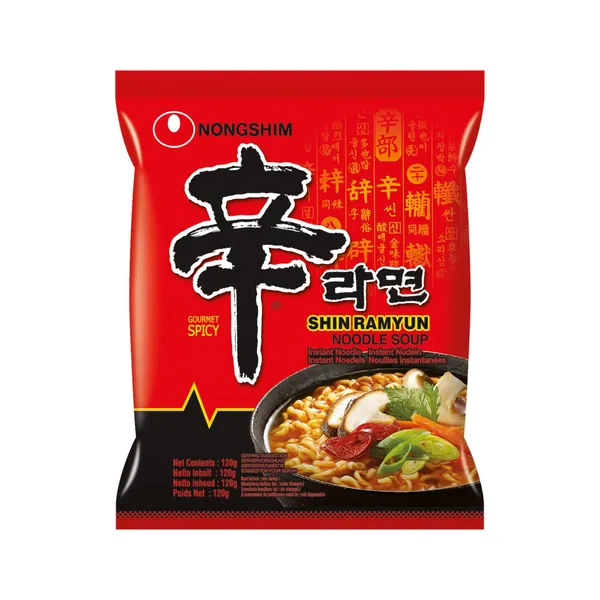
**Shin Ramyun (Nongshim)** is the default. Spicy beef broth, around 1,800 SHU equivalent in the finished broth, with a mushroom and dried vegetable sachet. Widely available in Tesco, Sainsbury's, and every oriental supermarket. If someone says they eat ramyun, this is probably what they mean.
**Jin Ramen (Ottogi)** comes in Mild and Spicy variants. The mild version is genuinely mild — a good entry point for those who find Shin too harsh. The noodles in Jin have a slightly different texture, more rounded.
**Buldak (Samyang)** is the fire-chicken noodle that went viral. The original is legitimately hot — around 4,400 SHU in the sauce. The 2x Spicy variant (8,808 SHU) is genuinely painful and not a cooking project — it is a challenge. The Carbonara and Cheese sub-variants dial the heat back considerably with a creamy sauce. Widely available in the UK now, including HMart and many oriental supermarkets.
**Chapagetti (Nongshim)** is instant jajangmyeon. Not a soup; a sauce-coated noodle. The flavour approximates real jajangmyeon more closely than you would expect from a packet. Good for a quick lunch.
**Neoguri (Nongshim)** is a thick, udon-style instant noodle in a spicy seafood broth. The noodles are notably thicker and chewier than Shin Ramyun noodles.
**Chapaguri** deserves a mention because of the *Parasite* film: it is Chapagetti and Neoguri cooked together in the same pot, the noodles combined and the sauce sachets merged. The combination is genuinely good — the black bean sauce from Chapagetti mixes with the seafood spice from Neoguri. In the film, it is served with hanwoo beef; at home, any marinated beef or nothing at all works.
All six are available in the UK from Tier 1 (Amazon, Tesco stocks Shin) and Tier 2 (HMart, Wing Yip, all oriental supermarkets).
Noodle-to-Dish Reference
| Dish | Noodle type | Broth or sauce | Served | |---|---|---|---| | Japchae | Dangmyeon | Soy, sesame oil, sugar | Warm or room temp | | Jajangmyeon | Thick wheat (alkaline) | Chunjang black bean + pork | Hot | | Jjamppong | Thick wheat (alkaline) | Spicy seafood broth | Hot | | Kalguksu | Wheat (hand-cut) | Anchovy or chicken broth | Hot | | Dak-kalguksu | Wheat (hand-cut) | Chicken broth | Hot | | Mul-naengmyeon | Buckwheat blend | Chilled beef broth | Ice cold | | Bibim-naengmyeon | Sweet-potato starch | Spicy gochujang sauce | Ice cold | | Janchi-guksu | Somyeon | Anchovy broth | Hot | | Bibim-guksu | Somyeon | Gochujang + vinegar | Cold | | Jjolmyeon | Extruded wheat + cornstarch | Gochujang + vinegar | Cold | | Shin Ramyun | Instant wheat (pre-fried) | Spicy beef powder broth | Hot | | Chapaguri | Chapagetti + Neoguri instant | Combined black bean + seafood | Hot |
Cooking Fundamentals
Four rules apply regardless of the noodle type:
**Never rinse noodles in hot water.** Cold rinse is appropriate only for dishes served cold (naengmyeon, bibim-guksu, japchae post-cook). Rinsing hot noodles before adding them to a hot sauce or broth removes the surface starch that sauces cling to, and the dish tastes thin. For naengmyeon specifically, rinse aggressively in cold running water until the surface is clean — cloudy water in the rinse means residual starch that will muddy the broth.
**Salt the wheat noodle water.** One tablespoon per litre for kalguksu, jajangmyeon noodles, somyeon, and jjolmyeon. Glass noodles (dangmyeon) do not need salt — they absorb flavour from the sauce they are cooked in.
**Drain and toss with sesame oil if not serving immediately.** A teaspoon of sesame oil prevents clumping without destroying surface tension. Do not use cooking oil — the flavour is wrong and it is too slippery.
**Undercook by 30 seconds** when noodles will finish in hot broth or sauce. Kalguksu noodles that are already fully cooked will go soft in a simmering broth. Pull them just before the packet says they are done.
These apply to home cooking of dried or fresh noodles. Instant ramyun follows packet instructions — the cooking time is calibrated to the pre-fried noodle's rehydration needs and is not comparable.
Where to Find Korean Noodles in the UK
Dangmyeon and somyeon are the easiest to source — both appear on Amazon and in all oriental supermarkets (Tier 1-2). Shin Ramyun and Buldak are now in Tesco and Sainsbury's. For naengmyeon and kalguksu, Sous Chef (online, Tier 3) and Wing Yip (Tier 2) are reliable. Fresh kalguksu and fresh naengmyeon require a visit to a Korean supermarket in New Malden or London Chinatown. Jjolmyeon is the hardest to find — Sous Chef online is the most consistent source.
All dried Korean noodles keep for months and often well over a year. Worth buying several types at once.