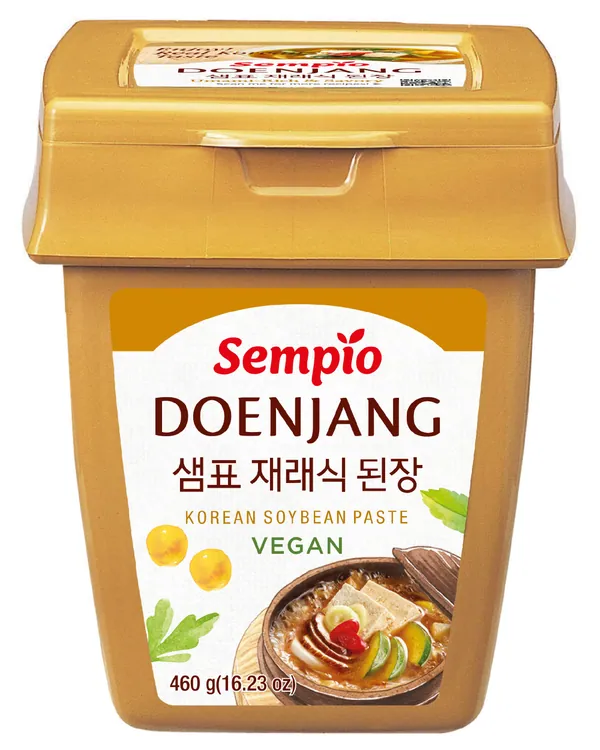
They are both fermented soybean pastes. They are both essential to their respective cuisines. But doenjang and miso are not interchangeable. Here is what sets them apart and when to use each.
Two Pastes, Two Traditions
Doenjang and miso share a common ancestor — fermented soybeans — but their production methods diverge significantly, resulting in pastes with quite different flavour profiles. Understanding the difference matters because substituting one for the other will change a dish in ways that go beyond a slight flavour shift. Each paste is designed for specific applications within its cuisine.
How They Are Made
Miso is made by fermenting soybeans with koji (a mould called Aspergillus oryzae) and often includes rice or barley. The koji drives the fermentation and produces a paste that ranges from sweet and mild (white miso) to rich and complex (red or hatcho miso). Doenjang is traditionally made differently. Soybeans are formed into blocks called meju, which are hung to dry and ferment naturally with wild bacteria and moulds. The resulting paste is then aged in earthenware crocks (onggi) with salt brine. This process produces a stronger, more pungent flavour — earthier, funkier, and less refined than miso.
Flavour Differences
Doenjang is assertive. It has a deep, almost aggressive soybean flavour with a pronounced fermented funk. It is salty, slightly bitter, and complex in a way that demands attention. Miso, particularly white miso, is milder, sweeter, and smoother. Even darker misos lack the raw intensity of doenjang. The difference is comparable to the gap between a sharp aged cheddar and a mild brie — both are cheese, both are fermented, but they bring entirely different things to a dish.
When to Use Each
Doenjang is essential for doenjang-jjigae (soybean paste stew), one of Korea's most important home-cooked dishes. It holds its own against garlic, chilli, and other strong flavours. It is also used in ssamjang (dipping paste for grilled meat) and as a seasoning for blanched vegetables. Miso is the foundation of miso soup and works well in dressings, glazes, and lighter applications where you want umami without overpowering other ingredients. Using miso in doenjang-jjigae will produce a soup that tastes Japanese rather than Korean — pleasant, but fundamentally different.
Can You Substitute?
In a pinch, a dark red miso (aka miso) is the closest substitute for doenjang, though it will still taste noticeably different. White miso is not a suitable substitute at all. Going the other direction, doenjang can replace dark miso in full-flavoured dishes but would overwhelm a delicate miso soup. The honest answer is that both are cheap enough and long-lasting enough that it is worth keeping one of each in your fridge. Doenjang and miso will both last for over a year refrigerated.
K-Food → VS
Doenjang vs Miso: What Is the Difference?
Korean doenjang and Japanese miso compared — flavour, uses, and which to buy.
Doenjang and miso share a common ancestor — fermented soybeans — but their production methods diverge significantly, resulting in pastes with quite different flavour profiles. Understanding the difference matters because substituting one for the other will change a dish in ways that go beyond a slight flavour shift. Each paste is designed for specific applications within its cuisine.
02
How They Are Made
Miso is made by fermenting soybeans with koji (a mould called Aspergillus oryzae) and often includes rice or barley. The koji drives the fermentation and produces a paste that ranges from sweet and mild (white miso) to rich and complex (red or hatcho miso). Doenjang is traditionally made differently. Soybeans are formed into blocks called meju, which are hung to dry and ferment naturally with wild bacteria and moulds. The resulting paste is then aged in earthenware crocks (onggi) with salt brine. This process produces a stronger, more pungent flavour — earthier, funkier, and less refined than miso.
03
Flavour Differences
Doenjang is assertive. It has a deep, almost aggressive soybean flavour with a pronounced fermented funk. It is salty, slightly bitter, and complex in a way that demands attention. Miso, particularly white miso, is milder, sweeter, and smoother. Even darker misos lack the raw intensity of doenjang. The difference is comparable to the gap between a sharp aged cheddar and a mild brie — both are cheese, both are fermented, but they bring entirely different things to a dish.
05
When to Use Each
Doenjang is essential for doenjang-jjigae (soybean paste stew), one of Korea's most important home-cooked dishes. It holds its own against garlic, chilli, and other strong flavours. It is also used in ssamjang (dipping paste for grilled meat) and as a seasoning for blanched vegetables. Miso is the foundation of miso soup and works well in dressings, glazes, and lighter applications where you want umami without overpowering other ingredients. Using miso in doenjang-jjigae will produce a soup that tastes Japanese rather than Korean — pleasant, but fundamentally different.
In a pinch, a dark red miso (aka miso) is the closest substitute for doenjang, though it will still taste noticeably different. White miso is not a suitable substitute at all. Going the other direction, doenjang can replace dark miso in full-flavoured dishes but would overwhelm a delicate miso soup. The honest answer is that both are cheap enough and long-lasting enough that it is worth keeping one of each in your fridge. Doenjang and miso will both last for over a year refrigerated.