Gochujang: The Essential Guide to Korea's Fermented Chilli Paste
Gochujang is the backbone of Korean cooking — a fermented chilli paste that's sweet, spicy, and umami-rich all at once. Here's how to choose the right one and what to do with it.
What Actually Is Gochujang?
Gochujang is a thick, sticky fermented paste made from gochugaru (Korean red chilli flakes), glutinous rice, fermented soybean powder, and salt. Traditionally it's aged in earthenware pots called onggi for months or even years, during which the starches break down into sugars and the fermentation develops deep, complex flavours.
The result is something that doesn't really have a Western equivalent. It's spicy, yes, but also sweet, savoury, and slightly funky from the fermentation. Think of it as the Korean answer to miso paste — a foundational ingredient that adds depth to practically everything it touches.
How to Use It
The simplest starting point is bibimbap sauce: mix a tablespoon of gochujang with a teaspoon of sesame oil, a splash of rice vinegar, and a pinch of sugar. Drizzle it over rice, vegetables, and a fried egg. That's lunch sorted.
Gochujang also makes a brilliant marinade base. Mix it with soy sauce, garlic, ginger, and a little honey for chicken thighs or pork belly — the sugars in the paste caramelise beautifully under a hot grill. It works stirred into stews, mixed into mayo for a spicy sandwich spread, or even whisked into salad dressings where you want warmth without raw chilli heat.
How Hot Is Hot? GHU Ratings
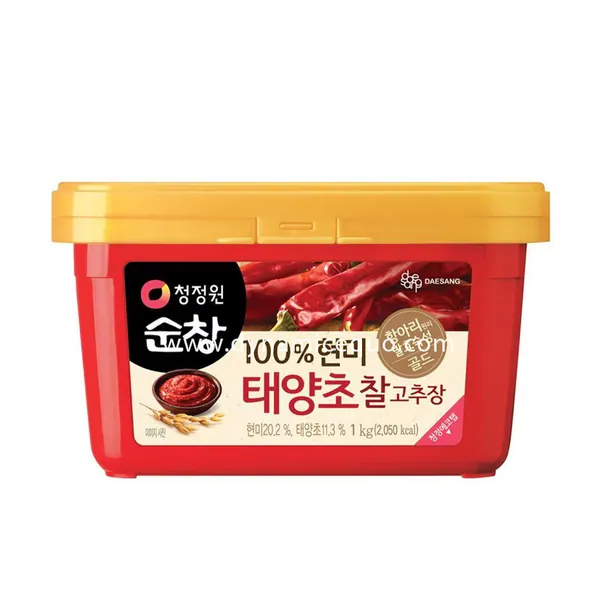
Korean brands mark heat on the jar using GHU (Gochujang Hot Units) — an industry standard since 2010. If you see Korean on the label, look for one of four tiers: 순한 맛 (mild, 30–33 GHU), 보통 맛 (medium, 45–75 GHU), 매운맛 (spicy, 75–100 GHU), and 매우매운맛 (very spicy, 100+ GHU). Sunchang's "원조 매운 고추장" (original spicy) sits mid-75 — a safe default for UK cooks who already use Sriracha or harissa comfortably. Stepping up to 매우매운맛 is a real jump, not a marketing one.
For comparison: the underlying gochugaru (chilli flakes) range from 1,500 to 10,000 Scoville depending on variety, but fermentation blunts much of the raw heat and adds sweetness, so gochujang rarely feels as aggressive as its Scoville would suggest.
Which Brand Should You Buy?
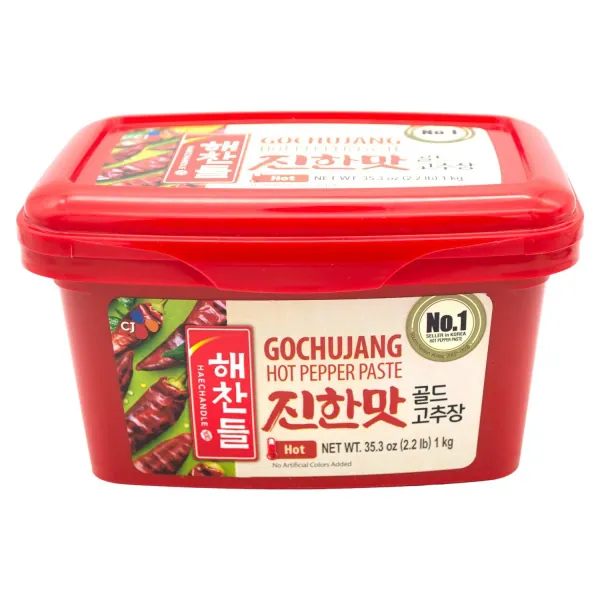
**CJ Haechandle** is the most widely available and probably the best all-rounder. It's the brand most Korean households actually use. The heat level is moderate — enough to notice but not enough to dominate. The 500g tub will last months in the fridge and costs around six quid on Amazon.
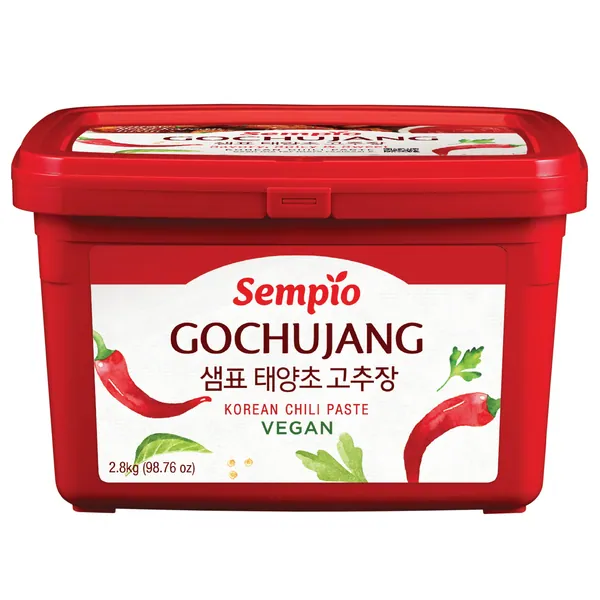
**Sempio** makes a milder version that's worth seeking out if you're sensitive to spice or cooking for children. It's slightly sweeter and less assertive, which makes it more versatile as a cooking ingredient.
**Daesang Sunchang** is the premium option. Sunchang is a region in South Korea famous for its gochujang production, and the paste has a rounder, more developed flavour. The 1kg tub is excellent value if you know you'll use it regularly.
Where to Find It in the UK
Tier 1 — mainstream supermarkets: Tesco and Sainsbury's carry Chung Jung One Sunchang in larger stores. Expect £3.50–£5 for a 500g tub.
Tier 2 — specialist in person: Wing Yip (Croydon, Birmingham, Cricklewood, Manchester), Oriental Mart, New Loon Moon in London's Chinatown. Wider brand selection and better prices than supermarkets.
Tier 3 — online specialist: Sous Chef (souschef.co.uk) ships UK-wide with reliable Korean stock. Amazon UK stocks all the major brands with same-week delivery. Avoid very fresh "artisan" hwanggan-jang style bottles as a first purchase — the flavour is more aggressive than Sunchang and can throw off tested recipes.
Substitutions — What Actually Works
Nothing is a clean one-to-one swap, but if you are mid-recipe and out of gochujang, these are the honest options:
| Swap | Works for | Loses | |---|---|---| | Miso + gochugaru + honey (3:2:1) | Marinades, sauces | The ferment depth — closest overall shape | | Doenjang | Stews where you want umami not heat | All the heat and sweetness | | Miso alone | Mild marinades | All heat; sweeter and less funky | | Sichuan doubanjiang | Fiery stir-fries | Too salty, wrong flavour profile | | Sriracha + brown sugar | Quick dipping sauces | No fermentation umami, thinner body | | Harissa | Emergency grilling glaze | Caraway and garlic-forward, wrong direction |
Do not substitute doenjang, miso, or doubanjiang if the recipe depends on gochujang for heat — you will end up with a brown sauce that tastes wrong and corrects awkwardly.
Storage and Shelf Life
Once opened, gochujang keeps for well over a year in the fridge — the high salt content and fermentation make it remarkably shelf-stable. The paste may darken slightly over time, which is normal and doesn't affect the flavour. Keep the lid on tight and use a clean spoon each time to avoid introducing anything that might cause mould.