Korean BBQ at Home: The Kit You Need for Your UK Kitchen
You don't need to book a table at a Korean restaurant to enjoy proper KBBQ. With the right equipment and a few key ingredients, your kitchen table becomes the best seat in Seoul.
What Makes Korean BBQ Special
Korean BBQ isn't just grilling meat — it's a whole format for eating. The grill sits in the centre of the table, everyone cooks together, and the meat is wrapped in lettuce leaves with rice, dipping sauces, and banchan (side dishes). It's interactive, social, and genuinely fun in a way that standing over a Weber in the rain never quite manages.
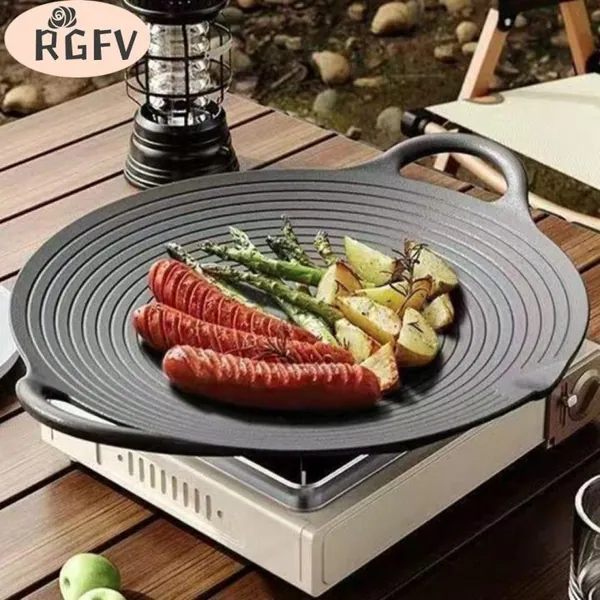
In Korean restaurants, the grill is built into the table with an extractor fan overhead. At home, you obviously can't do that, but you can get surprisingly close with a portable gas stove and a Korean grill plate. Open a window, clear the dining table, and you're most of the way there.
The Essential Equipment
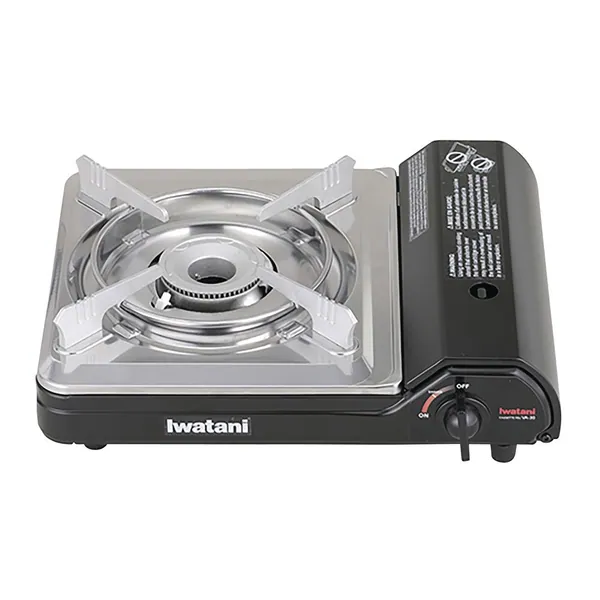
**A portable butane gas stove** is the heart of the setup. The Iwatani is the industry standard — it's what Korean restaurants actually use for tabletop cooking. It runs on cheap butane canisters (about a pound each from camping shops), produces a strong, even flame, and is compact enough to store in a cupboard. You'll use it for hot pot nights, camping trips, and power cuts long after the BBQ hype wears off.
**A Korean BBQ grill plate** sits on top of the stove. The dome shape is important — it channels fat away from the meat and down into a drip tray, which reduces smoke and stops everything sitting in grease. Non-stick versions are easier to clean but don't produce quite as good a sear as cast iron. For a first purchase, non-stick is the practical choice for a UK kitchen without commercial ventilation.
Marinades and Sauces
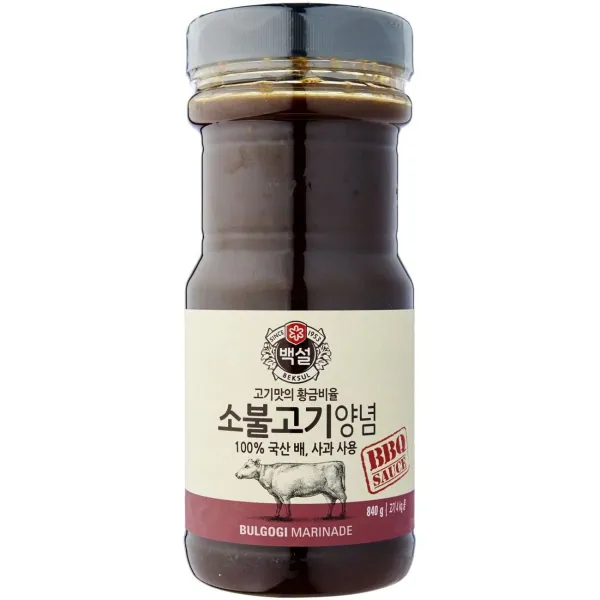
You can absolutely make bulgogi marinade from scratch — soy sauce, pear juice, garlic, sesame oil, sugar — but **CJ Beksul's bottled version** is what many Korean households actually keep in the fridge. It's sweet, savoury, and does a proper job of tenderising cheaper cuts of beef. Marinate thinly sliced rib-eye or sirloin for at least two hours, ideally overnight.
For dipping, **Sempio's sauce set** gives you the three essentials: ssamjang (a thick, savoury paste for wrapping), sesame oil with salt, and a soy-based dipping sauce. These three cover every meat and vegetable you'll grill.
Grill Options for UK Kitchens
**Tabletop gas** (Iwatani + dome grill plate) is the closest to the restaurant experience and produces the best sear. It requires ventilation — open windows, extractor fan on, accept that your kitchen will smell of grilled meat for a day.
**Electric tabletop grills** are quieter on smoke but produce less heat, which means the meat steams slightly rather than searing. They work, but the result is less convincing. Useful if you genuinely cannot open windows or live in a flat with communal ventilation rules.
**Cast-iron griddle on the hob** is the no-new-equipment option. A heavy cast-iron skillet ripping hot delivers excellent caramelisation and requires nothing beyond what most kitchens already own. The communal table experience disappears, but the food is arguably better than an electric grill.
Meat Cuts
For bulgogi, use rib-eye or sirloin sliced two to three millimetres thick. This is thin — ask your butcher to do it, or partially freeze the joint at home and slice on a sharp knife. M&S and Waitrose both stock pre-sliced beef in their world food sections. Pork belly and pork shoulder (samgyeopsal and moksal) should also be sliced four to five millimetres thick.
Marinate beef in bulgogi sauce for at least two hours, overnight if possible. Pork belly for KBBQ is typically unmarinated — the sauces and ssam provide all the flavour.
Making Ssamjang at Home
Ssamjang is the thick dipping paste used for ssam wraps, and the bottled versions are convenient but making it fresh takes three minutes and tastes better. Combine two tablespoons of doenjang (fermented soybean paste), one tablespoon of gochujang, a teaspoon of sesame oil, one clove of minced garlic, a teaspoon of honey, and a teaspoon of toasted sesame seeds. Stir and taste — adjust heat or sweetness to preference. This keeps in the fridge for two weeks.
What to Drink
Soju is the canonical pairing. The classic Korean table move is "somaek" — soju and beer mixed roughly 1:3, stirred with chopsticks. It sounds unlikely but the combination is genuinely refreshing against rich, fatty meat. Korean lager (Hite, Cass) is available from Asian supermarkets across the UK. For wine, a cold, dry Riesling or crisp Grüner Veltliner handles the heat and fat better than most reds.
The Side Dishes
KBBQ without banchan is just grilling. At minimum: kimchi (shop-bought is fine), pickled radish (danmuji), steamed short-grain rice, and lettuce or perilla leaves for wrapping. Shredded spring onion (pa-muchim) dressed with sesame oil, gochugaru, and a pinch of sugar takes five minutes and cuts through the richness. Prep banchan in the afternoon so you can sit and cook with everyone at the table rather than shuttling to the kitchen.