Samgyeopsal at Home: The Complete Guide
Samgyeopsal (grilled pork belly) is Korea's most popular barbecue dish. You do not need a fancy Korean BBQ restaurant to enjoy it — here is everything you need to recreate the experience at home.
What Is Samgyeopsal?
Samgyeopsal (삼겹살) literally means "three-layer meat" — 삼 *sam* (three) + 겹 *gyeop* (layer) + 살 *sal* (flesh). The name describes the cross-section: alternating bands of fat and lean pork belly that render down into something extraordinary on a hot grill. It is Korea's favourite barbecue cut, grilled at the table in thick slices and eaten wrapped in lettuce leaves with ssamjang, garlic, and chilli. Unlike bulgogi, the meat is not marinated — the quality of the pork does all the work, and ssamjang handles the salt.
The Cut: What to Ask For
Thickness is the single most important variable. Korean restaurants use 8–10 mm slices. That is thick enough to render the fat properly and char the outside while staying juicy within. Thinner than that and you have bacon. Thicker and the centre stays raw.
UK supermarkets — Tesco and Sainsbury's included — pre-slice pork belly at 3–5 mm. It will work in a pinch, but it overcooks fast and loses the fat-render that makes the dish. You have three better options:
**Tier 1 (easiest):** Korean supermarkets in New Malden or Wing Yip stock pre-sliced samgyeopsal at 8–10 mm, sold in 500g–1 kg vacuum packs. This is the best ready-to-cook option.
**Tier 2 (any good butcher):** Ask for a rindless pork belly joint, unsliced. Slice it yourself at home: chill the joint for 30 minutes first, then cut across the grain with a sharp knife. You control the thickness.
**Tier 3 (online):** Oriental Mart and Sous Chef both stock Korean-spec belly. Frozen-then-thawed is perfectly acceptable — Korean BBQ restaurants use fresh, but home cooks will not notice the difference.
**Skin on vs off:** Skinless is more common at Korean restaurants — it grills faster and the fat renders more evenly. Skin-on (sometimes labelled *ogyeopsal*, "five-layer") is prized by some for the crispy exterior but needs longer cooking at slightly lower heat. Either works. Allow 200–250 g of pork per person.
UK Sourcing in Summary
| Source | Where | Thickness | Cost | |---|---|---|---| | Korean supermarket (New Malden) | Tier 2 | 8–10 mm | £6–9 / kg | | Wing Yip | Tier 2 | 8–10 mm | £7–10 / kg | | UK butcher (joint, self-slice) | Any butcher | DIY | £5–8 / kg | | Tesco / Sainsbury's | Tier 1 | 3–5 mm | £4–6 / kg | | Oriental Mart / Sous Chef (online) | Tier 3 | 8–10 mm | £8–12 / kg |
Grilling Equipment
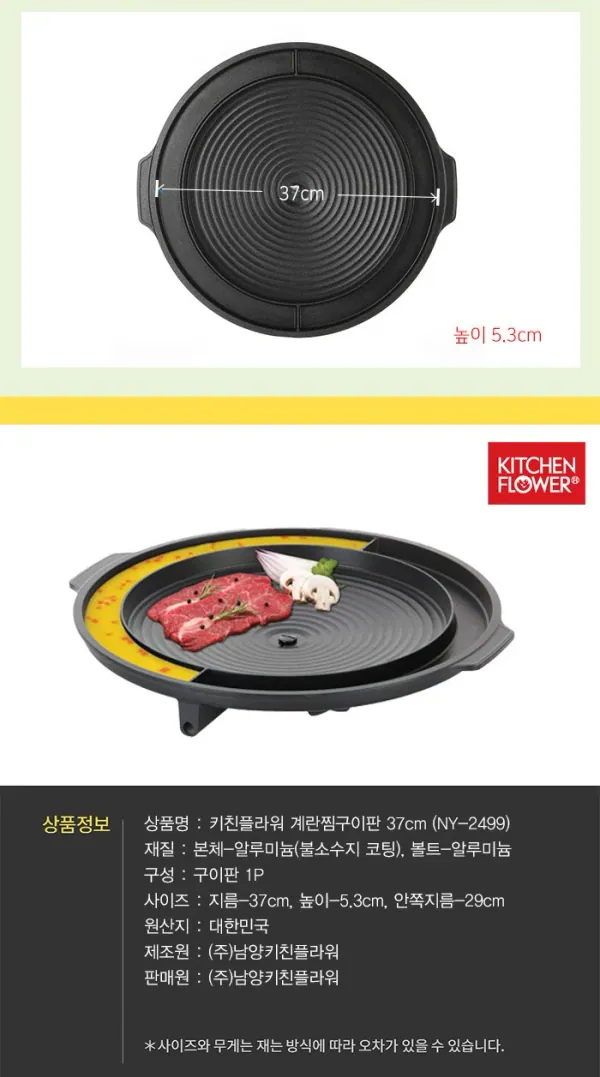
**Portable butane grill (부르스타)** — This is the authentic Korean home setup. A compact table-top burner running on replaceable butane cartridges. Brands to look for on Amazon: Iwatani (Japanese, reliable, £30–45), Camp Chef, or generic Korean-brand equivalents. Cartridges cost about £1 each and one lasts a full meal.
**Cast-iron griddle pan** — The most practical substitute for UK hobs. Gets hot enough, retains heat well, and gives a good char. Cook in batches and keep cooked meat warm in a low oven.
**Electric indoor grill** (George Foreman-style) — Works but loses the fat-drip aesthetic and the smokiness. Fine for a weeknight shortcut.
**Outdoor charcoal BBQ** — Excellent in summer. Samgyeopsal over charcoal has a different quality to gas — smokier, slightly drier — and is worth trying when the weather cooperates.
**Avoid non-stick pans.** The temperatures required (200°C+) will damage the coating and ruin the char.
Ssamjang: Why the Jarred Version Is a Shortcut Worth Skipping
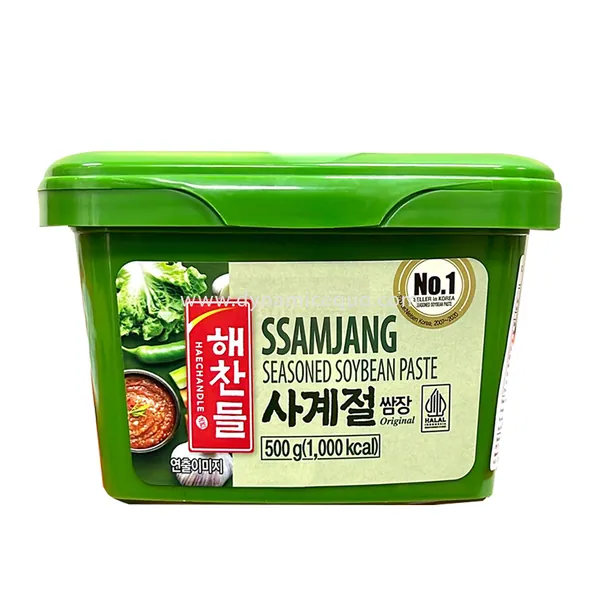
CJ Haechandle ssamjang (on the products list above) is good enough and very convenient. But homemade takes five minutes and is noticeably better. The jarred version is sweeter and milder; homemade packs more garlic punch and has a fresher, rougher texture.
**Ssamjang recipe for four people:**
- 3 tbsp doenjang (Korean fermented soybean paste) - 1 tbsp gochujang - 2 cloves garlic, minced - 1 scallion, finely chopped - 1 tsp sesame oil - 1 tsp sesame seeds - 1 tsp honey or sugar
Stir together. Taste and adjust — more doenjang for depth, more gochujang for heat. Keeps in the fridge for five days. The doenjang does the heavy lifting; without it you just have a chilli paste.
The Table Setup
Samgyeopsal is a table assembly, not a plated dish. Set everything out before the grill goes on:
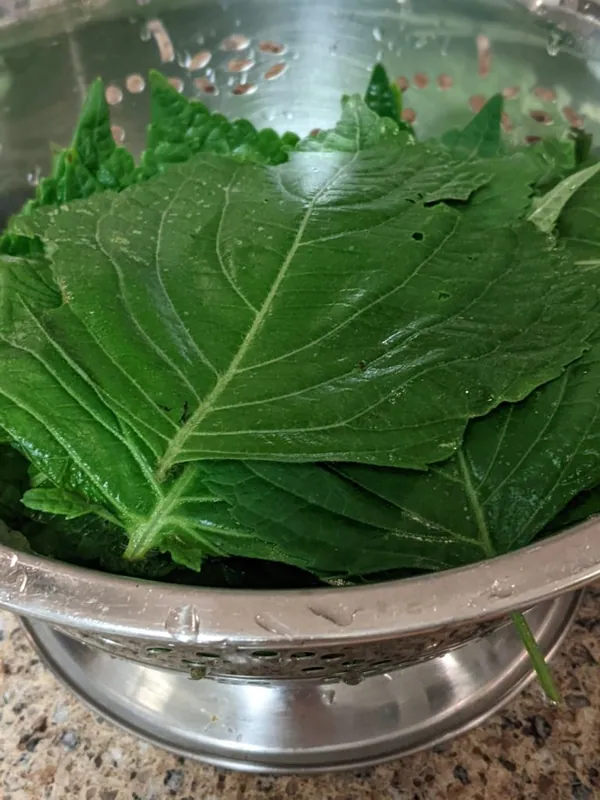
- Ssam leaves: fresh lettuce (red leaf, butter, or cos), fresh perilla (*kkaennip*) if you can find it, pickled perilla from a jar if not - Raw garlic: thin slices, not whole cloves - Raw green chilli: sliced into rounds - Ssamjang in a small bowl - Kimchi: ideally aged and sour; grill it on the edges of the pan for caramelised sweetness - Danmuji (pickled yellow radish): any Korean brand; provides crunch and sweetness to cut the fat - Sesame oil + fine salt: for dipping plain grilled pieces before wrapping
The banchan spread matters. Kongnamul (seasoned bean sprouts), pa-muchim (spring onion salad), and oi-muchim (cucumber salad) round out a proper Korean BBQ table. None of them are difficult. Look up a quick kongnamul recipe — it takes eight minutes.
Cooking Technique
Preheat the grill or pan until it is very hot — 200°C+ on the surface. Lay the pork belly slices down without seasoning. The fat should begin to sizzle immediately.
Key points:
- **Render fat first.** If the slice has a visible fat cap, place fat-side down for 30 seconds before flipping. - **Flip often.** Every 60–90 seconds, not just once. This distributes heat evenly and prevents scorching. - **Cut with scissors.** As the meat cooks, snip it into bite-size pieces directly on the grill. This is standard practice in Korea and not optional for the proper experience. - **Multiple small batches** beat one crowded pan. Crowded pans steam instead of char. - **Total time per batch:** 4–6 minutes. The meat should be cooked through with a proper char on the outside.
Grill garlic slices and kimchi alongside the meat. Garlic sweetens with heat; kimchi caramelises and loses its rawness.
The Wrap Ritual
The *ssam* (wrap) is where all the components come together. Five steps:
1. Lay a ssam leaf flat on your palm — lettuce or perilla, your choice. 2. Dab ssamjang in the centre of the leaf. 3. Place one piece of grilled pork on top. 4. Add a slice of garlic, a round of green chilli, and optionally a small amount of rice. 5. Fold the leaf into a parcel and eat in one bite.
The one-bite rule is not optional in Korean food culture. Biting into a half-assembled wrap is considered poor table manners. Make smaller wraps if needed — the perilla leaf is smaller than lettuce and better calibrated for this.
The combination of fatty pork, herbal ssam leaf, pungent garlic, spicy chilli, and salty-spicy ssamjang is one of the genuinely great flavour experiences in Korean food. It is richer than the sum of its parts.
Drink Pairings
**Soju** is the default. Jinro Chamisul, Chum Churum, and Hite-Jinro Good Day are all available on Amazon UK. Serve chilled, in shot glasses. The routine is a shot of soju, a bite of pork, repeat.
**Somaek** — soju + beer — is at least as popular as straight soju. The classic ratio is one part soju to three or four parts Hite or Cass lager. Mix in the glass, not the bottle.
**Makgeolli** is cloudy, lightly fizzy rice wine with a sweet, slightly sour character. It pairs particularly well with kimchi and cuts the fat of the pork better than beer does. Available at Wing Yip and online from Korean grocery suppliers.
**Beer alone** works fine. Korean lagers — Terra, Kloud, Hite — are light and designed to accompany food without competing with it.
Open the Windows
A final note for UK flat dwellers: samgyeopsal produces a serious amount of smoke. Ventilation is not optional. Open every window in the kitchen, run the extractor fan if you have one, and consider positioning the grill near the window. The smell lingers on fabric. The trade-off is completely worth it, but go in knowing.