From the buttery-smooth Dong-A My Gel to the cult-favourite Monami 153, these are the Korean gel pens worth importing. We tested ink flow, dry time, and comfort across weeks of daily use.
Why Korean pens feel so good
Korean stationery brands have been quietly dominating the pen world for decades. Monami alone has been going since 1963, and their 153 ballpoint is basically the national pen of South Korea — over 4 billion sold. The reason Korean pens tend to feel so good comes down to ink formulation. Brands like Dong-A and Monami invest heavily in low-viscosity gel inks that glide without skipping, even on cheap copier paper. If you have ever fought with a pen that blobs on the first stroke, Korean gel pens are the antidote.
The standout: Dong-A My Gel
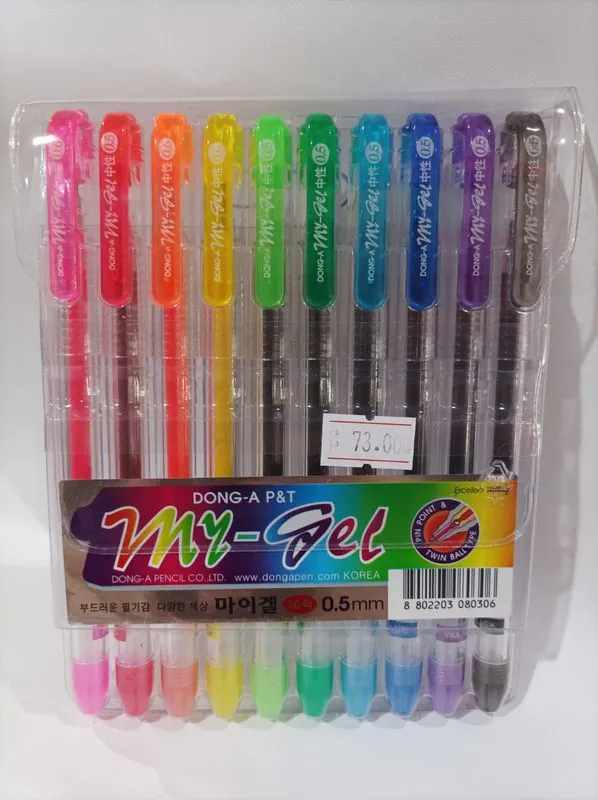
The Dong-A My Gel 0.5mm is the pen most people start with, and for good reason. The ink flow is remarkably consistent from first use to last drop, and it dries fast enough that left-handers can use it without smearing. At under £9 for a ten-pack, it is genuinely difficult to justify spending more on everyday writing. The barrel is nothing fancy — thin, lightweight plastic — but the writing experience punches well above its price.
Monami 153 ID and Plus Pen 3000
The Monami 153 ID is a modernised version of the classic 153 with a slightly weighted metal body and a satisfying click mechanism. It feels more premium in the hand and the gel ink is smooth without being wet. If you want colour, the Plus Pen 3000 felt-tips come in dozens of shades and are a staple of Korean students and bullet journalers. The tips are firm enough for writing but soft enough for light illustration work.
Worth knowing before you buy
Most Korean pens use standard international refills or proprietary ones that are cheap to replace. Shipping from Amazon UK is straightforward for all five picks here, though JetPens and CultPens sometimes carry limited-edition colourways that Amazon misses. One thing to watch: Korean 0.38mm tips feel noticeably finer than Japanese 0.38mm tips from brands like Pilot, so if you prefer a thicker line, stick with 0.5mm.
K-Stationery → Picks
Best Korean Gel Pens for Everyday Writing
Four Korean gel pens that actually live up to the hype.
Korean stationery brands have been quietly dominating the pen world for decades. Monami alone has been going since 1963, and their 153 ballpoint is basically the national pen of South Korea — over 4 billion sold. The reason Korean pens tend to feel so good comes down to ink formulation. Brands like Dong-A and Monami invest heavily in low-viscosity gel inks that glide without skipping, even on cheap copier paper. If you have ever fought with a pen that blobs on the first stroke, Korean gel pens are the antidote.
02
The standout: Dong-A My Gel
The Dong-A My Gel 0.5mm is the pen most people start with, and for good reason. The ink flow is remarkably consistent from first use to last drop, and it dries fast enough that left-handers can use it without smearing. At under £9 for a ten-pack, it is genuinely difficult to justify spending more on everyday writing. The barrel is nothing fancy — thin, lightweight plastic — but the writing experience punches well above its price.
03
Monami 153 ID and Plus Pen 3000
The Monami 153 ID is a modernised version of the classic 153 with a slightly weighted metal body and a satisfying click mechanism. It feels more premium in the hand and the gel ink is smooth without being wet. If you want colour, the Plus Pen 3000 felt-tips come in dozens of shades and are a staple of Korean students and bullet journalers. The tips are firm enough for writing but soft enough for light illustration work.
05
Worth knowing before you buy
Most Korean pens use standard international refills or proprietary ones that are cheap to replace. Shipping from Amazon UK is straightforward for all five picks here, though JetPens and CultPens sometimes carry limited-edition colourways that Amazon misses. One thing to watch: Korean 0.38mm tips feel noticeably finer than Japanese 0.38mm tips from brands like Pilot, so if you prefer a thicker line, stick with 0.5mm.