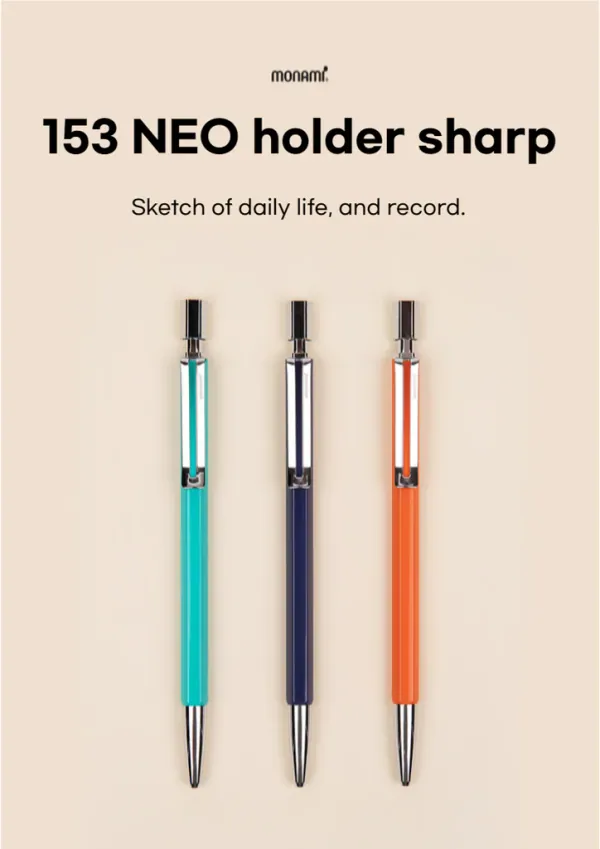
Monami 153 vs 153 ID: Which Click Pen to Actually Buy
Monami makes three click pens in the 153 family — the original, the ID, and the Neo. They look similar on the shelf. The differences, once you write with all three, are real and worth knowing before you spend anything.
What the Numbers Mean: 151, 153, Neo
The 153 name is a piece of Korean product history. When Monami launched Korea's first domestic pen in 1963, they called it by its specs: 1 colour, 5 parts, 3 won. The 151 came later as a thinner-barrelled variant, and the Neo arrived in the mid-2010s to modernise the classic shape without abandoning it. Three pens, one lineage.
The original 153 uses a low-viscosity oil-based ballpoint ink with a hexagonal barrel that has stayed essentially unchanged since the 1960s. The Neo refined it — tighter tolerances, a smoother clip action, marginally improved ink formulation. Then the ID arrived and changed the premise entirely.
The 153 ID Upgrade: Metal Body, Gel Flow, Click Feel
The 153 ID shares the 153 barrel shape and the click mechanism, but almost nothing else. The body is a mix of metal and hard plastic rather than all-plastic, giving it a noticeably different weight and a colder feel in hand. More significantly, it uses a gel ink cartridge rather than a ballpoint one.
That switch matters more than the materials. Gel ink at 0.7mm writes wetter and darker than ballpoint at the same tip size. Lines appear bolder on the page, the ink flows with zero pressure required, and the writing surface feels like it has a slight texture to it — a quality that fans describe as "gliding" and detractors call "too slippery". The click feel is improved too: firmer deployment, less rattle when capped.
The tradeoff is drying time. The gel formulation takes a few seconds longer to set than the ballpoint in the original, which matters for left-handed writers or anyone who moves their hand across the page quickly.
When the Original 153 Still Wins
There are situations where the classic outperforms its more expensive sibling.
Long writing sessions on coated or slightly slick paper — the kind used in many UK school exercise books and ring-binders — suit ballpoint better. Gel ink can skip on coated surfaces when the nib is not pressed with consistent pressure; ballpoint adjusts naturally. The original 153 also handles low-temperature environments better, which is relevant if you write in an unheated workshop, car, or outdoor classroom in a British winter.
Pack size is the other argument. The original comes in packs of ten or twenty at a price that puts each pen well below £1.50. For students going through several pens a term, or anyone who reliably loses writing instruments, the economics of the ID simply do not add up. The original writes well enough — and has done for sixty years.
UK Pricing and Pack Sizes
As of early 2026, UK buyers have a few realistic options. Amazon UK is the most consistent source for all three variants. The original 153 appears regularly in 10-packs and 20-packs; the Neo in 5-packs; the ID most commonly in 2-packs and 3-packs. CultPens stocks the Neo and occasionally the ID but sell out of the ID faster.
The price-per-pen gap is significant. Original 153s in a 10-pack work out to around £1.30 each; the ID in a 3-pack tends to land between £3.00 and £3.50 per pen. For a pen you will likely leave at the bottom of a bag, that difference adds up.
If you are buying for a desk that stays at home, the ID is worth the premium. If you are buying for a bag, a locker, or a classroom, the original makes more sense.
Verdict: Writer, Student, Everyday
For someone who writes at a desk daily and cares about the feel of their pen, the 153 ID is the right choice. It writes darker, feels better in the hand, and the metal barrel means it survives the minor physical abuse that pens accumulate over years of use.
For students, note-takers, and anyone who gets through pens quickly, the original 153 or the Neo remains the sensible answer. They write better than almost anything else at their price, and have done reliably for decades. The brand's whole reputation was built on these — they did not become Korea's most iconic pen by accident.
FAQ
**Is the Monami 153 ID refillable?** Yes. The ID uses a standard gel refill cartridge. Replacements are available from specialist pen retailers like CultPens, though availability in the UK is more limited than for major Japanese and German brands.
**Does the Monami 153 work on glossy paper?** The original ballpoint version copes reasonably well with coated paper. The ID gel version may skip if the paper is heavily coated — test on a corner before committing to a full spread.
**What is the difference between the 153 and the 151?** The 151 has a narrower barrel intended for smaller hands. The writing mechanism is similar to the original 153. Both use ballpoint ink.
**Are Monami pens available in UK high street shops?** Not widely. Some Korean supermarkets in London and Manchester stock Monami, but Amazon UK is the most reliable source for most readers.