Ice Therapy Skincare Tools: Cryo Globes, Ice Rollers, and More
Cold therapy is one of the oldest skincare tricks in the book — and the modern crop of cryo globes, ice rollers, and cooling wands has made it more convenient than holding frozen peas to your face. We tested five tools across different price points to find the ones worth your freezer space.
Why Cold Works on Skin
When cold is applied to skin, blood vessels constrict — a process called vasoconstriction. This immediately reduces redness, swelling, and puffiness. When the cold is removed, blood rushes back to the area, delivering fresh oxygen and nutrients. This flush-and-constrict cycle is why your skin looks brighter and tighter after cold exposure. It also temporarily reduces the sensitivity of nerve endings, which is why ice therapy can calm irritated or reactive skin.
Cold does not penetrate deeply enough to affect collagen or fat cells at the temperatures these tools deliver. The benefits are primarily circulatory and anti-inflammatory — real and visible, but temporary.
Five Tools Ranked
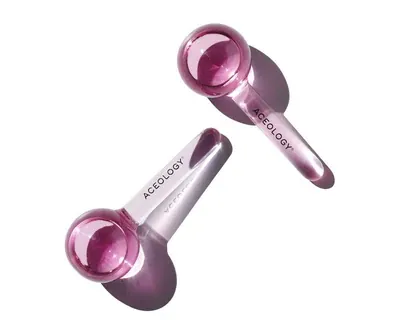
**Aceology Ice Globes** are the gold standard of cryo tools. The glass spheres filled with antifreeze liquid stay cold for 10 to 15 minutes after refrigeration (no freezer needed — the fridge is sufficient). They glide beautifully over serums and oils, and having a pair means you can work both sides of the face simultaneously. At £52 they are not cheap for what is essentially a glass ball, but the quality and experience are noticeably superior to imitations.
**FOREO BEAR Mini Cryo** is the tech-forward option. Rather than relying on pre-chilling, it uses thermoelectric cooling to drop to 6 degrees Celsius on demand, combined with T-Sonic pulsation for a massage element. No fridge required. At £159 it is expensive for an ice tool, but the convenience of instant cooling without any preparation is genuinely useful.
**Skin Gym Cryoball** is a solid stainless steel ball that retains cold well after 10 minutes in the freezer. It is satisfyingly heavy and rolls smoothly across the face. At £22 it offers good value and the stainless steel is more durable than glass alternatives. The main drawback is that it only stays cold for 8 to 10 minutes before needing re-freezing.
**Dr. BEAUTY Ice Facial Cubes** are silicone moulds with handles that you fill with water (or green tea, or aloe juice) and freeze. They are the most direct form of ice therapy and cost next to nothing. The downside is mess — they melt, drip, and cannot be used with serums already on the face. At £15 for a set, they are a decent starting point for anyone curious about ice therapy.
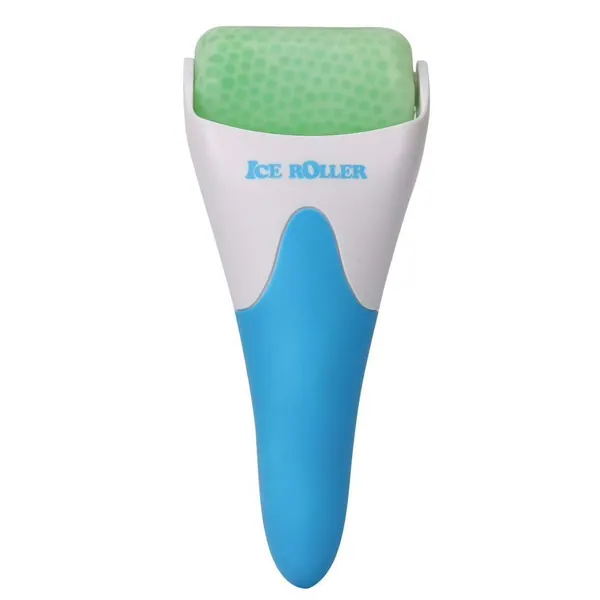
**Esarora Ice Roller** at £9 is the simplest tool here. Pop it in the freezer, roll it across your face. It covers more surface area per pass than a globe or ball, making full-face sessions quicker. The gel core holds cold for 5 to 8 minutes. Build quality is basic but functional. As an entry-level ice tool, it is hard to argue with the price.
When to Use Ice Therapy
Morning is the optimal time for ice therapy — puffiness from overnight fluid retention responds best to cold. Use after cleansing but before moisturiser for de-puffing, or over a sheet mask to enhance absorption and calm the skin. After a skin treatment that causes redness (retinol, exfoliating acids, or microneedling), cold therapy can help reduce inflammation. Avoid ice tools on broken skin, active acne pustules, or areas with broken capillaries — the vasoconstriction-vasodilation cycle can worsen these conditions.