Microcurrent facial toning promises lifted cheekbones and a tighter jawline without needles. We spent twelve weeks with three popular devices to see what holds up beyond the marketing claims and before-after lighting tricks.
The theory behind microcurrent
Microcurrent devices send low-level electrical currents (typically under 400 microamps) through the skin to stimulate facial muscles. The idea is similar to how physiotherapy uses electrical stimulation on injured muscles — gentle contractions that, over time, improve tone and firmness. Clinical studies do support that microcurrent can increase ATP production in cells and promote collagen synthesis, but most of the published research uses professional-grade equipment at higher intensities than home devices deliver. That does not mean home devices are useless — it means expectations need calibrating.
What twelve weeks looked like
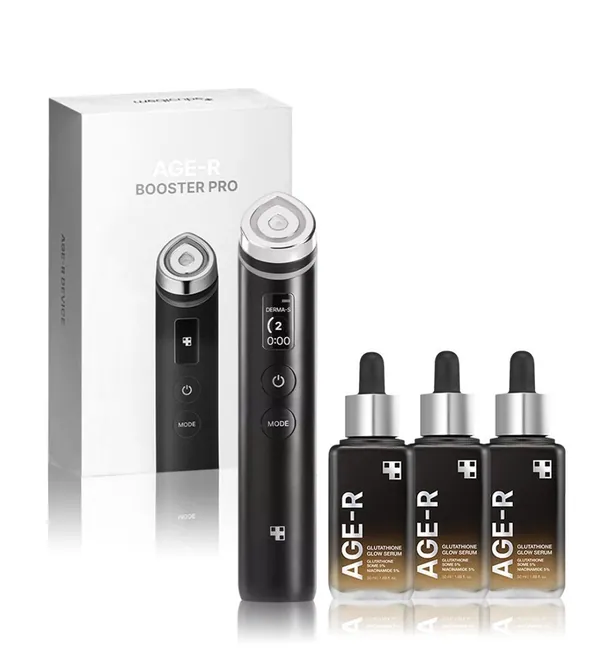
The MEDICUBE AGE-R Booster Pro combines microcurrent with EMS (electrical muscle stimulation) and red LED in a single head, which makes it the most feature-dense option here. It is also the most popular device in South Korea right now, regularly selling out on Korean platforms. The five intensity levels mean you can start conservatively and build up. After twelve weeks of four-to-five sessions per week, the most noticeable change was along the jawline — a subtle tightening that was visible in consistent lighting, not dramatic but real.
The NuFACE Mini+ is the Western market's default microcurrent device and works well as a pure microcurrent tool. It glides smoothly with the included gel primer, and the three-minute treatment time makes it easy to maintain as a habit. Results were similar to the MEDICUBE after twelve weeks, though the lack of additional modes means you are paying £185 for microcurrent alone. The AMIRO R3 TurboLift bundles microcurrent with radiofrequency and red LED at a lower price point. It felt warmer during use thanks to the RF component, and the overall experience was pleasant, though the build quality does not feel quite as premium as the other two.
The honest verdict
Microcurrent devices work — but incrementally. You will not look five years younger after a month. What you may notice is slightly firmer skin, a marginally more defined jawline, and improved product absorption from the electrical stimulation. The effects are cumulative and will fade if you stop using the device. Think of it like exercise for your face: consistent effort, gradual returns. Anyone expecting dramatic lifting or wrinkle elimination from a home device will be disappointed, regardless of which one they buy.
Choosing between them
If you want the most versatile Korean-brand option with multiple treatment modes, the MEDICUBE Booster Pro offers the best value per feature. If you want simplicity and a proven track record, the NuFACE Mini+ does one thing reliably. The AMIRO sits between them as a budget-conscious multi-mode alternative. All three require a conductive gel or serum to work properly — never use them on dry skin, as the current needs a medium to travel through effectively.
Skincare Devices → Editorial
Microcurrent Devices: Do They Actually Work?
We tested three microcurrent toning devices and dug into the science.
Microcurrent devices send low-level electrical currents (typically under 400 microamps) through the skin to stimulate facial muscles. The idea is similar to how physiotherapy uses electrical stimulation on injured muscles — gentle contractions that, over time, improve tone and firmness. Clinical studies do support that microcurrent can increase ATP production in cells and promote collagen synthesis, but most of the published research uses professional-grade equipment at higher intensities than home devices deliver. That does not mean home devices are useless — it means expectations need calibrating.
02
What twelve weeks looked like
The MEDICUBE AGE-R Booster Pro combines microcurrent with EMS (electrical muscle stimulation) and red LED in a single head, which makes it the most feature-dense option here. It is also the most popular device in South Korea right now, regularly selling out on Korean platforms. The five intensity levels mean you can start conservatively and build up. After twelve weeks of four-to-five sessions per week, the most noticeable change was along the jawline — a subtle tightening that was visible in consistent lighting, not dramatic but real.
The NuFACE Mini+ is the Western market's default microcurrent device and works well as a pure microcurrent tool. It glides smoothly with the included gel primer, and the three-minute treatment time makes it easy to maintain as a habit. Results were similar to the MEDICUBE after twelve weeks, though the lack of additional modes means you are paying £185 for microcurrent alone. The AMIRO R3 TurboLift bundles microcurrent with radiofrequency and red LED at a lower price point. It felt warmer during use thanks to the RF component, and the overall experience was pleasant, though the build quality does not feel quite as premium as the other two.
03
The honest verdict
Microcurrent devices work — but incrementally. You will not look five years younger after a month. What you may notice is slightly firmer skin, a marginally more defined jawline, and improved product absorption from the electrical stimulation. The effects are cumulative and will fade if you stop using the device. Think of it like exercise for your face: consistent effort, gradual returns. Anyone expecting dramatic lifting or wrinkle elimination from a home device will be disappointed, regardless of which one they buy.
05
Choosing between them
If you want the most versatile Korean-brand option with multiple treatment modes, the MEDICUBE Booster Pro offers the best value per feature. If you want simplicity and a proven track record, the NuFACE Mini+ does one thing reliably. The AMIRO sits between them as a budget-conscious multi-mode alternative. All three require a conductive gel or serum to work properly — never use them on dry skin, as the current needs a medium to travel through effectively.